
Why modern teams choose cubic
- Ship faster – shorten review‑to‑merge time by up to 30 percent, letting your team focus on features instead of style nits.
- Prevent production incidents – surfaces regressions and edge-case failures before they reach customers, reducing outages and post-mortems.
- Context-aware analysis – examines your entire codebase and past merges to avoid noisy, one-size-fits-all warnings.
- Actionable diff suggestions – inline fixes you can apply with a single click.
- Learns from your feedback – replies or approvals adapt future reviews for the whole team.
- Works out of the box – zero configuration required; extend later with custom rules.
cubic runs in an isolated container and never stores source code. See our AI security and privacy documentation.
Key features
-
Automated code reviews
- Scans pull requests for logic errors, style inconsistencies and potential vulnerabilities.
- Adds structured comments and suggestions directly in the pull request.
-
Codebase awareness
- Detects the libraries and frameworks in your repository, including version numbers.
- References existing patterns or utilities when proposing improvements.
-
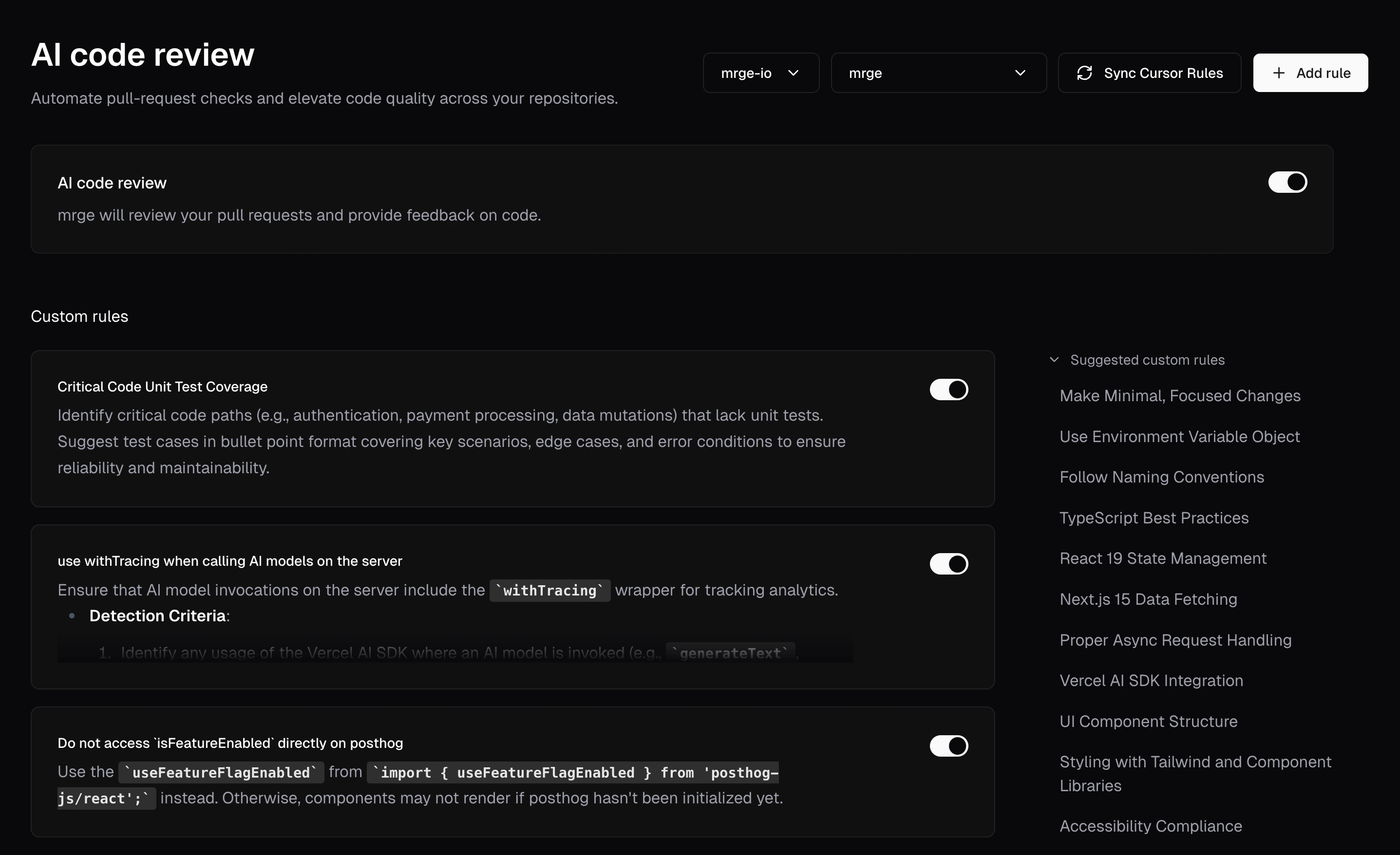
Custom rules
- Enforce domain‑specific guidelines or internal best practices.
- Violations are flagged automatically based on your configured rules.
-
Adaptive feedback
- Learns from previous merges, review comments and dismissals.
- Reduces false positives over time and tailors advice to your codebase.
How it works
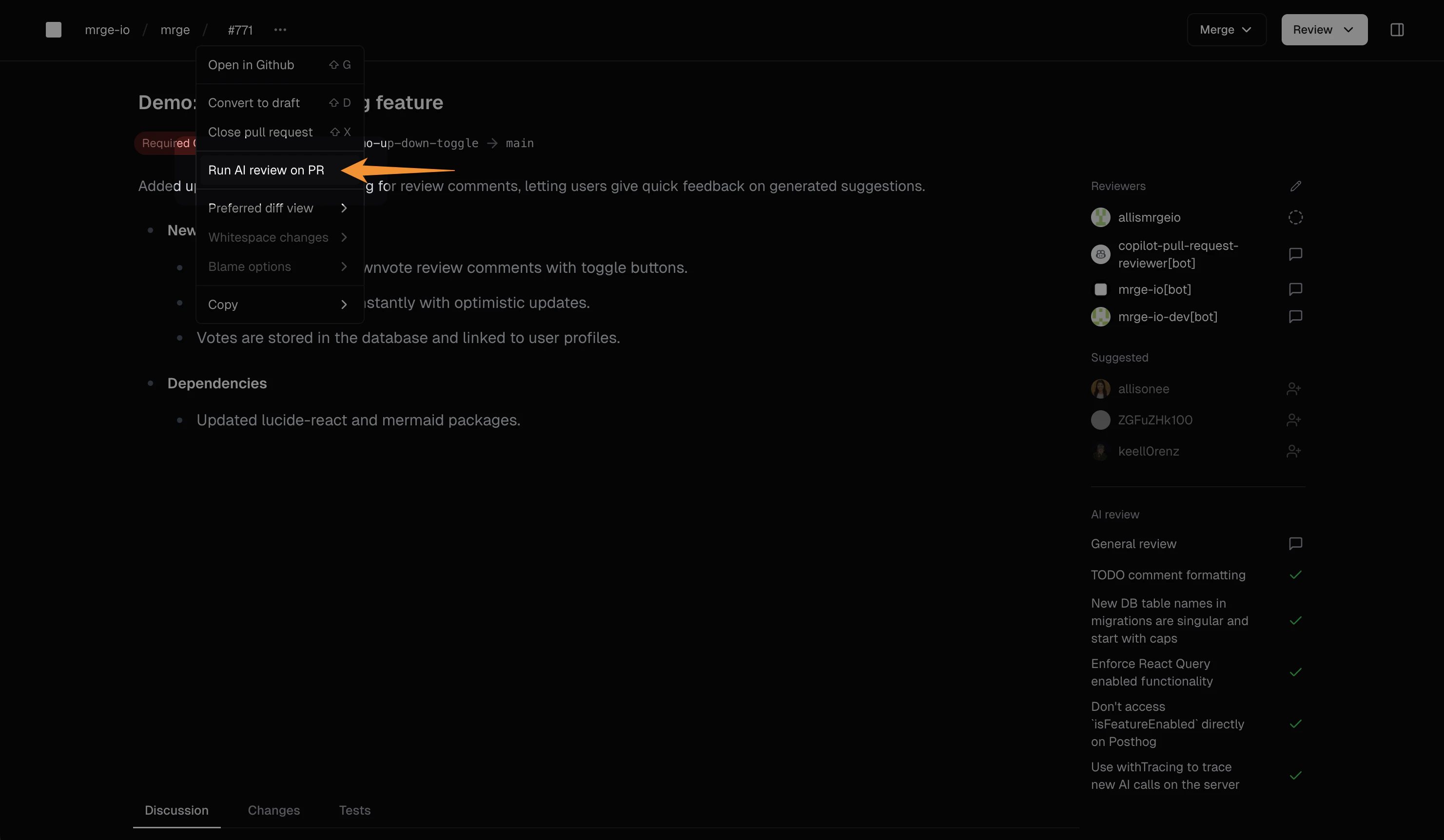
Manually trigger a new review
You can run the AI review again at any time:- Select Run AI review from the pull‑request action menu.
- Or click the circular arrow icon on the right‑hand toolbar.
- Or tag @cubic-dev-ai in any PR and the AI will automatically run a new review and confirm it’s processing.
Next steps
- Create custom rules – tailor the reviewer to your guidelines.
- AI review settings – configure library versions, ignore patterns and more.
- Providing feedback – fine‑tune the AI by responding to its comments.